Many wellness enthusiasts struggle to separate marketing hype from legal reality when evaluating supplement brands. Do misleading business models and compliance warnings mean your favorite vitamins are unsafe, or are these claims simply exaggerated noise?
This complete guide breaks down the core legal disputes, regulatory warnings, and consumer impacts surrounding isotonix lawsuit claims with total clarity.
What is the Isotonix Lawsuit?
Understanding the Core Legal Claims
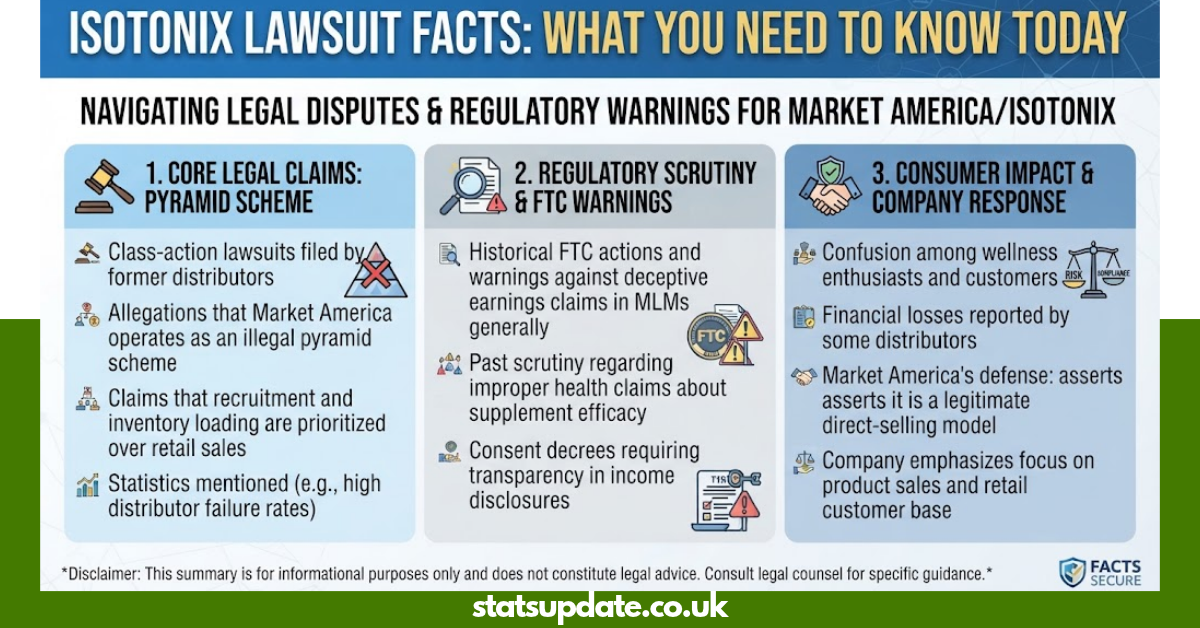
The primary legal scrutiny surrounding isotonix lawsuit filings targets Market America, the parent multi-level marketing (MLM) company. Class-action complaints filed by former distributors allege that the corporate structure functions as a pyramid scheme rather than a legitimate retail business. Plaintiffs argue that roughly ninety percent of participants lose money due to mandatory monthly fees and heavy recruitment requirements.
How Did the Court Cases Proceed?
Instead of moving through prolonged public courtroom trials, federal judges pushed several major claims into confidential arbitration. This legal maneuver relies on binding arbitration clauses embedded within standard distributor agreements. Consequently, public visibility into specific monetary settlements remains restricted, leaving many independent observers searching for factual updates.
Why Did the FDA Issue a Warning Letter?
Regulatory Actions Beyond Civil Litigation
Apart from civil litigation, Market America faced severe regulatory oversight when the U.S. Food and Drug Administration (FDA) issued an official warning letter. This regulatory notice highlighted critical compliance failures rather than a criminal trial. Inspectors scrutinized specific product labels, marketing language, and safety reporting protocols.
Key Labeling and Safety Violations Flagged
- Inaccurate Serving Directions: Labels provided conflicting instructions between text descriptions and graphic dosage guides.
- Undeclared Ingredients: Certain botanical blends lacked precise compositional breakdowns required by federal guidelines.
- Adverse Event Failures: The company failed to properly document and report severe consumer health complaints to federal authorities.
Key Details of the Market America Business Model
| Feature | Company Stance | Plaintiff Allegations |
| Primary Focus | Direct retail sales of isotonic supplements | Mandatory recruitment of downline distributors |
| Financial Outcomes | Lucrative income potential for active builders | Over 90% of participants experience net financial loss |
| Product Pricing | Premium cost reflects advanced nutrient delivery | Overpriced goods that cannot compete fairly online |
How Does the Isotonix Lawsuit Affect Everyday Consumers?
Are the Supplements Safe to Drink?
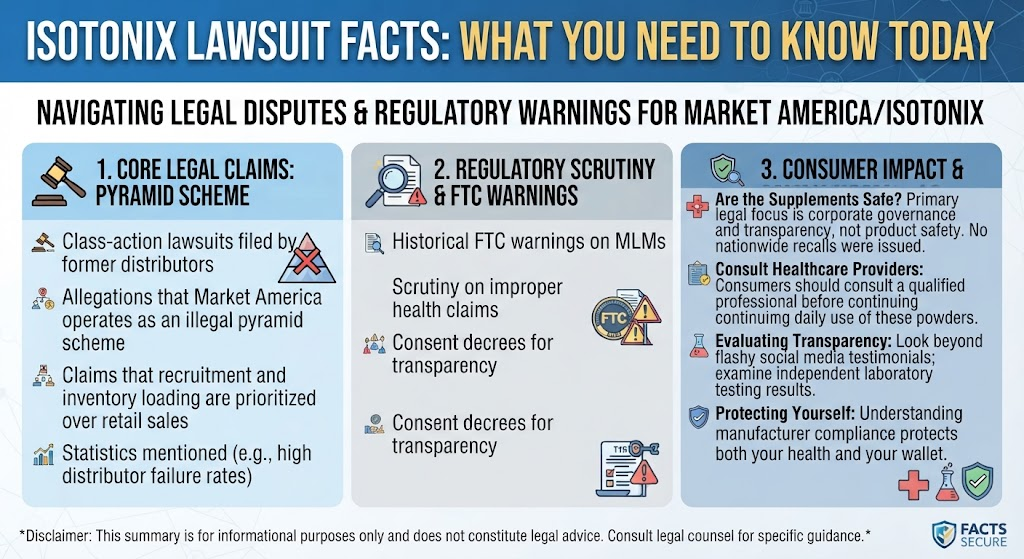
Legal and regulatory challenges primarily target corporate governance, MLM structures, and labeling transparency rather than outright product bans. While regulatory bodies cited documentation and formatting errors, they did not issue nationwide product recalls. Consumers who purchase these powders for daily wellness continue to use them, provided they consult qualified healthcare providers first.
Evaluating Corporate Transparency
The presence of an isotonix lawsuit highlights the necessity of thorough brand research. Smart shoppers look beyond flashy social media testimonials to examine independent laboratory testing. Understanding how a manufacturer handles consumer safety and regulatory compliance protects your health and your wallet.
What Do Former Distributors Say About the Company?
The Reality of Multi-Level Marketing Costs
Former independent distributors frequently report significant financial stress resulting from monthly auto-ship minimums. Testimonials filed in legal documents emphasize that purchasing personal inventory to maintain active status creates an unsustainable financial burden. These firsthand accounts form the backbone of ongoing public skepticism toward direct-sales health corporations.
Corporate Defense and Compliance Adjustments
In response to widespread criticism, corporate executives maintain that their business model complies fully with direct-selling laws. Company representatives assert that their formulations undergo rigorous internal checks and that independent contractors choose their own level of business commitment.
Frequently Asked Questions
The primary focus involves allegations that Market America operates an illegal multi-level marketing pyramid scheme that harms independent distributors financially.
No, the FDA issued a warning letter regarding labeling errors and safety reporting omissions, but did not issue a commercial product ban.
Yes, products remain available for purchase through authorized digital platforms and independent distributor networks.
Most class-action claims were redirected to private, confidential arbitration based on pre-signed distributor contracts.
While the brand promotes isotonic delivery for rapid nutrient absorption, independent clinical studies debate whether these benefits significantly outperform traditional capsules.
Individuals who experienced financial losses or compliance issues should preserve purchase receipts, contract agreements, and consult qualified consumer protection attorneys
Conclusion:
Navigating the complexities of an isotonix lawsuit demonstrates why consumer vigilance matters more than ever in the supplement industry. Total transparency, honest labeling, and ethical business practices form the bedrock of true brand trust. Share your thoughts or questions about industry transparency in the comments below to join the conversation.